Why NYC Flat Roofs Leak (And How to Fix Them)
If you own a building in New York City with a flat roof, chances are you've dealt with a leak — or you will. Flat roofs are everywhere in NYC, from Brooklyn brownstones to Queens rowhouses to Bronx apartment buildings. And while they're practical and cost-effective, they leak more than pitched roofs when they're not properly maintained.
The good news: most flat roof leaks have predictable causes. Once you know what to look for, you can catch problems early — before a $500 repair turns into a $15,000 emergency.
Here are the seven most common reasons NYC flat roofs leak, and exactly what we do to fix them.
1. Failed or Lifted Flashing
Flashing is the metal or membrane material that seals the transition between your roof and any vertical surface — parapet walls, chimneys, vents, skylights, and HVAC units. It's the number one cause of flat roof leaks in New York City.
Why it fails: Flashing expands and contracts with temperature changes. Over years of NYC winters and summers, it pulls away from walls, cracks at the seams, or separates at the base. Once there's even a small gap, water gets in every time it rains.
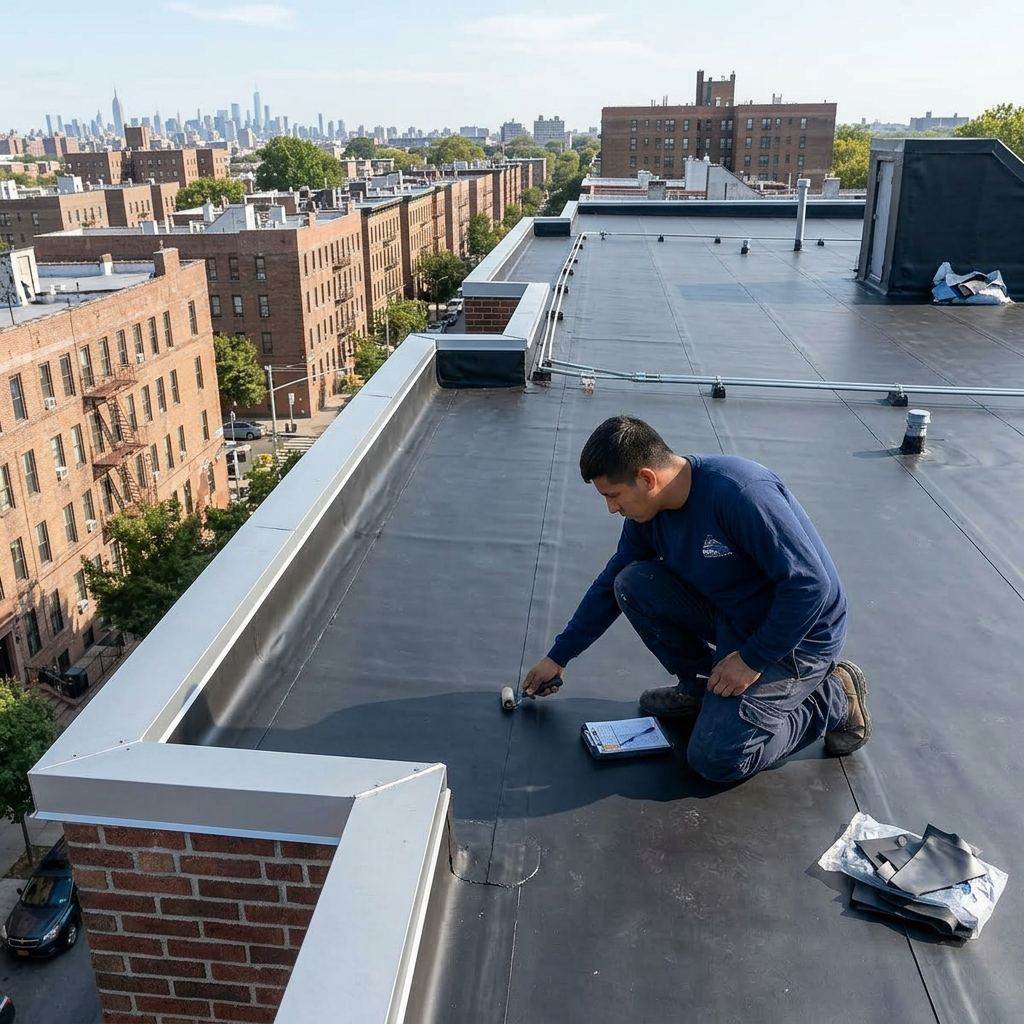
How we fix it: We remove the failed flashing, clean and prepare the substrate, and install new flashing with the correct overlap and sealant. On parapet walls we often install counter-flashing embedded into the masonry for a permanent watertight seal.
2. Ponding Water
Flat roofs aren't truly flat — they're designed with a slight slope toward drains or scuppers. When that drainage fails, water ponds on the surface. Ponding water is the silent killer of NYC flat roofs.
Why it causes leaks: Standing water puts constant pressure on the membrane, accelerates deterioration, adds structural load, and eventually finds any weak point — a seam, a blister, a hairline crack — and pushes through.
How we fix it: First we clear all drains and scuppers of debris. If the roof lacks adequate slope, we install tapered insulation underneath a new membrane to create positive drainage. This adds cost upfront but dramatically extends the roof's lifespan.
3. Seam Failures
On single-ply roofs like TPO and EPDM, the membrane comes in large rolls that overlap at the seams. On modified bitumen (torch-down) roofs, each layer overlaps the next. Those seams are the most vulnerable part of any flat roof system.
Why they fail: On EPDM roofs, seams are glued with adhesive that can dry out and separate over time. On older torch-down roofs, seams can crack or lift as the bitumen ages and loses flexibility. On TPO, improper installation is the main culprit — seams that weren't properly heat-welded will eventually open.
How we fix it: On TPO we re-weld open seams with a hot-air welder. On EPDM we apply seam tape and bonding adhesive. On modified bitumen we torch-seal lifted seams or install a new cap sheet over the affected area.
4. Blistering and Membrane Damage
Blisters appear as raised bubbles in the roof membrane — usually caused by moisture or air trapped between the membrane and the insulation below during installation. They're more common on older roofs and roofs that were installed in humid or wet conditions.
Why they cause leaks: Small intact blisters may be stable, but as they grow they become fragile. Foot traffic, hail, or just the freeze-thaw cycle can rupture them — creating an open hole in the membrane.
How we fix it: Small blisters are cut open, dried out, and patched with matching membrane material. Large areas of blistering usually indicate a more systemic problem with the insulation below — in those cases we recommend a full or partial replacement.
5. Cracked or Deteriorated Pipe Boots and Vent Collars
Every pipe, exhaust vent, and stack that penetrates your flat roof is a potential leak point. The rubber or metal collars that seal these penetrations — called pipe boots or vent collars — degrade over time from UV exposure and temperature cycling.
Why they fail: Rubber pipe boots crack and shrink. Metal collars rust. Sealant around penetrations dries out and pulls away. Once the seal breaks, water runs straight down the pipe and into the building.
How we fix it: We replace deteriorated pipe boots with new ones sized correctly for the pipe diameter, seal with urethane caulk, and reinforce with membrane patch material around the base. Takes under an hour per penetration and solves the problem permanently.
6. Parapet Wall and Coping Problems
The parapet walls that run around the perimeter of your flat roof take more weather abuse than almost any other part of the building. The coping — the cap on top of the parapet — is constantly exposed to rain, snow, freeze-thaw, and UV.
Why it causes leaks: Cracked coping allows water to enter the top of the parapet wall. That water then travels down through the masonry and can appear as leaks on interior walls one or two floors below the roof — making it very hard to diagnose without experience.
How we fix it: We repoint cracked mortar joints in the parapet, seal or replace cracked coping stones, and waterproof the entire parapet wall surface with an elastomeric coating. We also make sure the flashing at the base of the parapet is properly lapped onto the roof membrane.
7. Age and End of Useful Life
Sometimes the answer is simple: the roof is old and it's done. A modified bitumen roof has a lifespan of 15–20 years. TPO and EPDM last 20–25 years with proper maintenance. Built-up roofing (BUR) can last 20–30 years. When a roof reaches end of life, leaks become frequent and repairs become a losing battle.
Signs your roof has reached end of life: multiple active leaks in different locations, widespread cracking or brittleness in the membrane, significant granule loss, widespread blistering, or a repair history that's approaching the cost of replacement.
How we fix it: We perform a full roof assessment including core cuts to check insulation moisture levels, and give you an honest recommendation — repair or replace, with the full cost breakdown for each option.
How to Know What's Causing Your Leak
The tricky thing about flat roof leaks is that water rarely enters where it appears inside. A leak showing up as a ceiling stain in a second-floor bedroom might be entering through failed flashing on the parapet wall directly above, or through a cracked pipe boot on the opposite side of the roof.
That's why professional leak detection matters. At IronSky we use a systematic inspection process — starting at the most common failure points and working outward — to find the actual source before we quote any repair. We never recommend work that isn't needed.
Get a Free Flat Roof Inspection in NYC
IronSky Roofing & Waterproofing has diagnosed and repaired flat roof leaks across all five NYC boroughs since 2008. Our crews know every common failure point on every type of NYC flat roof — TPO, EPDM, modified bitumen, BUR, and built-up systems.
Free inspection. Written report. No obligation.
Call (929) 994-0907 or visit ironskyroofing.com/free-estimate to book yours today.
Get a Free Flat Roof Estimate
Licensed NYC roofers. Written, itemized quote. We respond within the hour during business hours.
- GAF Certified & Firestone Licensed
- Fully licensed & insured in NY State
- Free written estimate — no pressure
- Serving all 5 boroughs since 2008
Frequently Asked Questions
What is the most common cause of flat roof leaks in NYC?+
Failed or lifted flashing is the number one cause of flat roof leaks in NYC. Flashing seals the transition between the roof and vertical surfaces like parapet walls, chimneys, and vents. Years of freeze-thaw cycles cause it to pull away, crack at seams, or separate at the base, letting water in every time it rains.
Why does water pond on my flat roof?+
Flat roofs are built with a slight slope toward drains or scuppers. Ponding happens when drains are clogged with debris, when the slope was never adequate, or when the roof structure has settled. Standing water accelerates membrane failure and is one of the top causes of premature flat roof replacement in NYC.
How long does a flat roof last in NYC?+
TPO and EPDM single-ply roofs last 20–25 years with proper maintenance. Modified bitumen (torch-down) lasts 15–20 years. Built-up roofing (BUR) can last 20–30 years. NYC's extreme weather and freeze-thaw cycles can shorten these lifespans if the roof isn't inspected and maintained.
Can a leaking flat roof be repaired, or does it need full replacement?+
Most flat roof leaks can be repaired — failed flashing, open seams, cracked pipe boots, and small blisters are all fixable. Replacement is only required when the roof has reached end of life, has widespread membrane failure, or when wet insulation indicates systemic moisture damage. IronSky always recommends repair over replacement when it's the honest answer.
Why does my flat roof leak appear far from the actual damage?+
Water rarely enters a building where you see it inside. On a flat roof, water can travel along the underside of the membrane, through insulation, or down the inside of parapet walls before showing up as a ceiling stain. Professional leak detection is essential to find the true source before quoting repairs.
Does IronSky offer free flat roof inspections in NYC?+
Yes — IronSky provides free, no-obligation flat roof inspections across all five NYC boroughs and Long Island. We give you a written report with photos and an honest recommendation. Call (929) 994-0907 or book online at ironskyroofing.com/free-estimate.
Need a roofer in NYC?
IronSky offers free estimates and 24/7 emergency service across NYC, Long Island and Yonkers.
Get Free EstimateRelated Articles
All posts
A room-by-room, roof-by-roof method for tracing a flat roof leak in a Brooklyn rowhouse — membrane seams, flashing, penetrations, drains, ponding and parapets — without setting foot on the roof.

Water still sitting on your flat roof two days after the rain? Here is what causes ponding on NYC low-slope roofs, the damage it does before it leaks, and the repair options from drain work to tapered insulation.
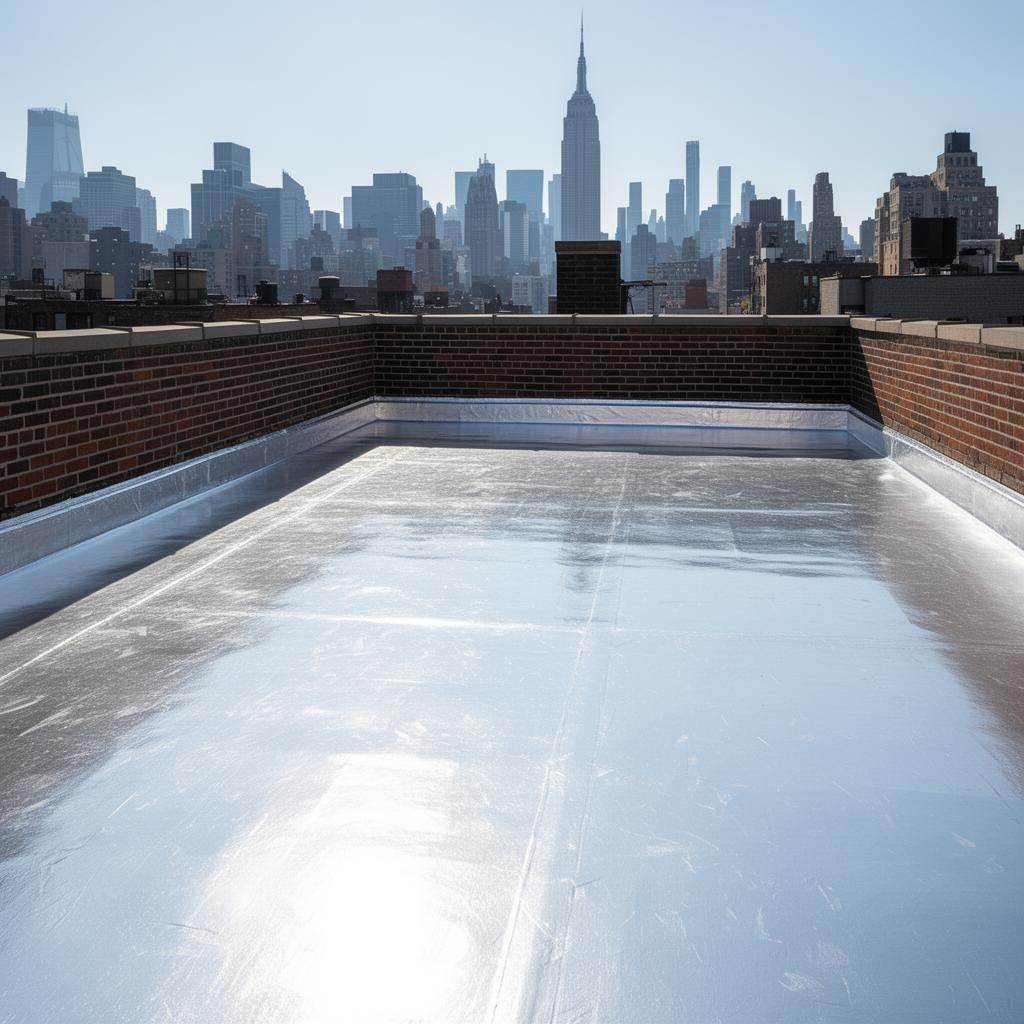
NYC Local Law 94 requires green or cool roofs on most new buildings. Learn what's required, what's exempt, costs, and how IronSky helps NYC property owners comply.