How to Stop Roof Leaks Before NYC Winter
NYC winter is brutal on roofs. Snow, freeze-thaw cycles, ice dams, and the constant expansion and contraction of materials can turn a hairline crack in October into a major leak by January. The single most important thing any NYC homeowner or building manager can do to protect a roof is a thorough fall inspection and prep — done before the first hard freeze.
This guide walks through the exact checklist our crews use when we do pre-winter prep on NYC homes and small commercial buildings. Some of these items you can do yourself; others should be handled by a licensed roofer. The whole list takes a professional crew about half a day on a typical row house and saves owners from the kind of January phone call no one wants to make.
Why winter is so hard on NYC roofs
Three things break roofs in winter: water, ice, and movement. Water sneaks into tiny gaps that are harmless in summer. When that water freezes overnight, it expands by about 9% and pries the gap wider. The next day it thaws, more water seeps in, and the cycle repeats — sometimes 30 or 40 times in a single NYC winter. By March, what started as a hairline crack is now a quarter-inch fissure with daylight visible through it.
Ice dams compound the problem. When attic heat melts snow on the upper roof but the eaves stay cold, the runoff refreezes at the gutter line and creates a dam. Water then pools behind the dam and works its way under shingles, where it has no business being. The image below shows what this looks like from the curb — once you can see icicles like these on your gutter line, water is already pooling on the roof above.

Step 1: Clean every gutter and downspout
This is the highest-impact, lowest-cost task on the list. Clogged gutters cause water to back up under the shingles at the eaves, which is exactly where ice dams form. Get every leaf and seed pod out, and run a hose to confirm the downspouts flow freely. If water doesn't flow, snake the downspout or have it professionally cleared. In Queens and parts of Brooklyn with mature trees, plan on doing this twice in the fall.
Step 2: Inspect parapet walls and coping
Brick and brownstone parapet walls take an absolute beating in winter. Look for cracks in the mortar, loose or shifted coping stones, missing sealant at the masonry-to-roof transition, and any spot where water could pool. Parapet failures are the leading cause of leaks in NYC row houses. A few hundred dollars of mortar work in October can prevent a $20,000 ceiling repair in February.
Step 3: Re-seal flashing around penetrations
Every chimney, vent pipe, skylight, and HVAC curb is a leak waiting to happen. Inspect the metal flashing for rust, lifted edges, and dried-out sealant. Replace any cracked caulk with high-quality polyurethane sealant rated for low temperatures. If the flashing itself is rusted through or pulling away, get it replaced — caulk over rusted flashing is a temporary fix at best.
Step 4: Check attic insulation and ventilation
Ice dams start with warm attics. If your attic insulation is inadequate, heat from the living space melts snow on the upper roof. Add insulation to bring it up to current NYC code (typically R-38 or higher) and confirm that soffit and ridge vents are clear. Proper ventilation keeps the underside of the roof cold enough that snow stays frozen until it slides off naturally. This single fix prevents more winter leaks in NYC than any other improvement.
Step 5: Walk the roof for membrane and shingle damage
On flat roofs, look for blisters, open seams, ponding water, and any spots where the membrane has been punctured by debris. On sloped roofs, look for missing, lifted, or curled shingles, especially in valleys and around penetrations. Replace anything questionable now — the cost of one shingle is nothing compared to interior repairs.
Step 6: Trim overhanging branches
Heavy snow and ice can break branches that fall on the roof. Branches that rub against shingles in wind also wear them down. Keep at least six feet of clearance between large branches and the roof. If a branch is large enough that it could damage the roof if it fell, get it removed by a tree service before winter — not after it's already on your kitchen ceiling.
Step 7: Have a snow removal plan
After major storms, more than 18 inches of wet snow on a flat roof is a structural concern. Know who to call before the storm hits. Never use metal shovels on a roof — they damage the membrane and shingles. Plastic shovels and roof rakes only.
What it costs vs what it saves
A full pre-winter inspection and prep on a typical NYC home runs $400-$800. The average winter leak that destroys ceilings, hardwood floors, and personal belongings costs $8,000-$25,000. The math is not subtle. Schedule pre-winter work in October. By Thanksgiving, every responsible roofer in the city is booked solid.
If you're managing a multi-unit building, multiply those numbers across every unit affected by a leak — and add the legal exposure when a top-floor tenant's belongings get destroyed. Pre-winter prep is the single highest ROI maintenance dollar in NYC building management.
Get a Free Flat Roof Estimate
Licensed NYC roofers. Written, itemized quote. We respond within the hour during business hours.
- GAF Certified & Firestone Licensed
- Fully licensed & insured in NY State
- Free written estimate — no pressure
- Serving all 5 boroughs since 2008
Need a roofer in NYC?
IronSky offers free estimates and 24/7 emergency service across NYC, Long Island and Yonkers.
Get Free EstimateRelated Articles
All posts
How often NYC homeowners should clean gutters, what to watch for, and when to call a pro.
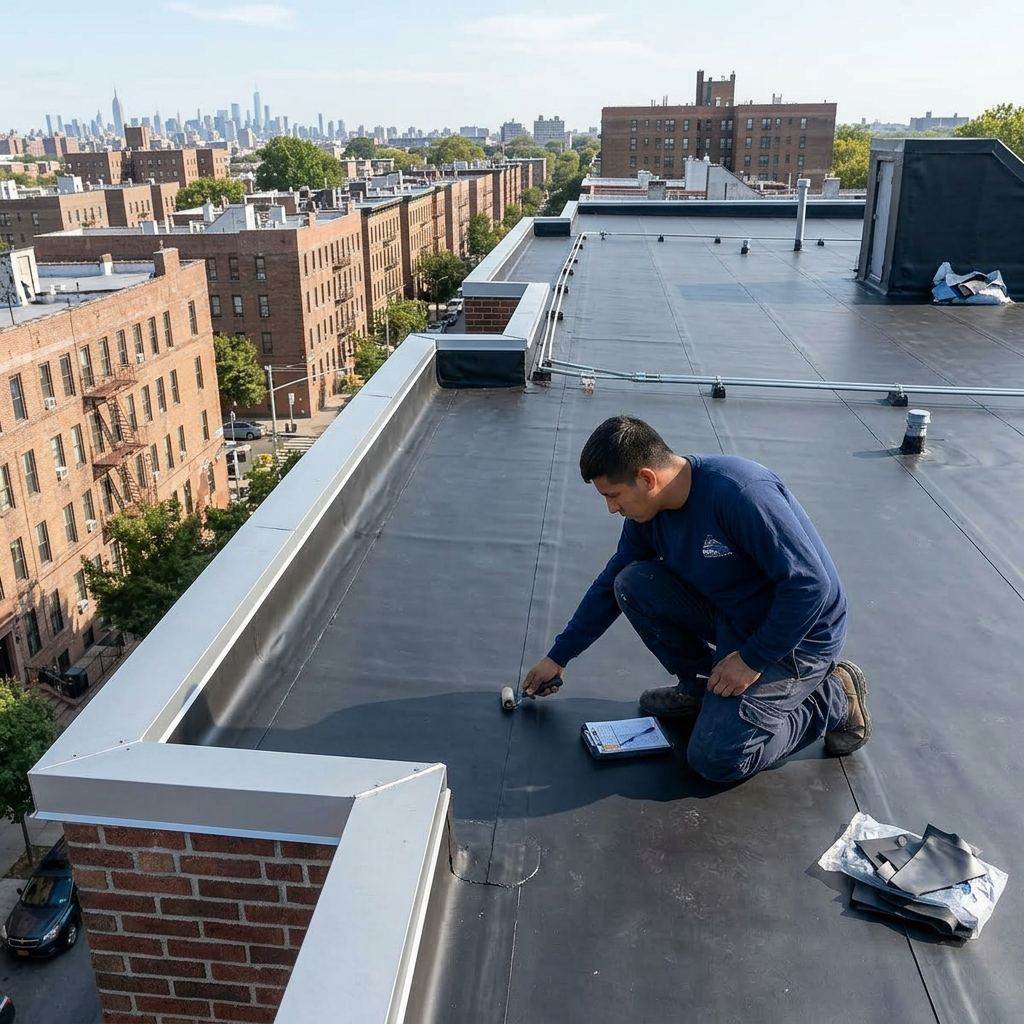
A 10-point roof inspection NYC checklist for fall — flashing, drainage, ponding, seams, parapets, skylights, HVAC curbs, chimney, and interior signs to catch before the freeze.

A room-by-room, roof-by-roof method for tracing a flat roof leak in a Brooklyn rowhouse — membrane seams, flashing, penetrations, drains, ponding and parapets — without setting foot on the roof.