NYC Roof Inspection Checklist — What to Look For Before Winter
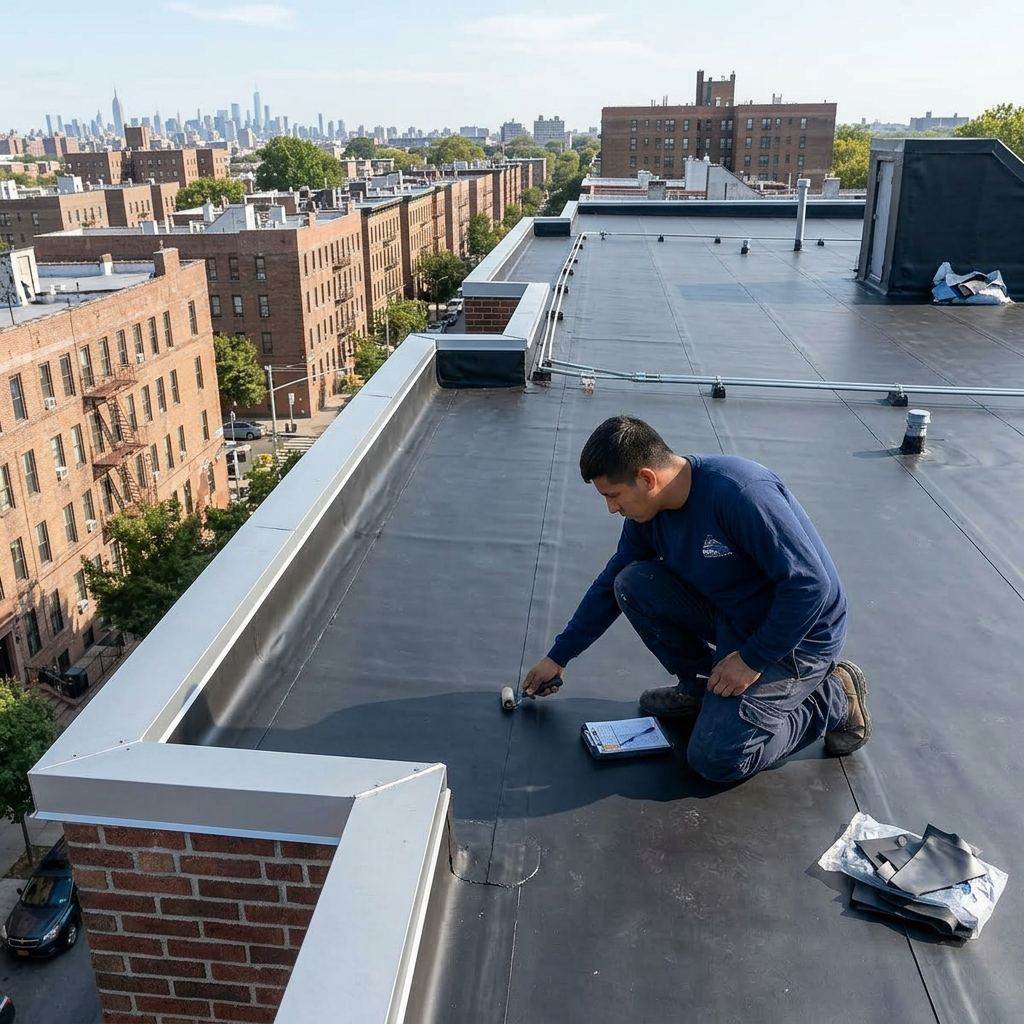
A proper fall roof inspection NYC owners can do — partly themselves, partly with a pro — is the single highest-ROI maintenance task on any building in the five boroughs. NYC winter is brutal: 30+ freeze-thaw cycles, ice dams, nor'easters, and weeks of subfreezing temperatures that turn every hairline crack into a real leak. Catching the small stuff in October is the difference between a $400 repair and a $14,000 January emergency that includes ceilings, drywall, and ruined floors.
Below is the 10-point checklist our crews actually use when we walk a NYC roof in the fall. Items 1–4 you can usually inspect yourself from the ground or attic. Items 5–10 should be inspected by a licensed roofer who is comfortable on a flat or pitched NYC roof.
1. Flashing condition
Flashing — the metal pieces that seal transitions around chimneys, walls, vents, and skylights — fails before the field of the roof. Look for rust, lifted edges, gaps, or caulking that has cracked or pulled away.
What it means: Failed flashing is the #1 source of NYC roof leaks. Once water gets behind the flashing, it travels along framing and shows up rooms away from the actual entry point.
When to call a pro: Any visibly lifted, rusted, or caulk-dependent flashing. Caulk is not a roofing material — if your roof is held together by it, the flashing needs to be properly redone.
2. Drainage and gutters
Walk every gutter and downspout. They should be clear, securely attached, and pitched correctly. Check that downspouts discharge well away from the foundation, not against the building.
What it means: Clogged gutters back water up under shingles and over parapet caps. Frozen blockages in January cause ice dams that drive water inside.
When to call a pro: Sagging gutters, separated joints, downspouts that disappear into a sidewalk drain that backs up, or any flat-roof drain that pools water around it.
3. Ponding areas on flat roofs
After a rain, a flat roof should drain within 48 hours. Look for permanent staining rings, debris collection in low spots, or visible standing water.
What it means: Standing water dramatically shortens membrane life and voids most manufacturer warranties. In winter that water freezes, expands, and stresses the membrane every cycle.
When to call a pro: Any pond larger than a dinner plate that doesn't drain within 48 hours, or any drain that is visibly lower than surrounding membrane.
4. Blistering or bubbling on the membrane
On TPO, EPDM, and modified bitumen roofs, look for raised bumps, ridges, or air pockets under the membrane.
What it means: Blisters mean trapped moisture or air below the membrane — often from a failed adhesive or a wet substrate. Once they pop, the roof leaks.
When to call a pro: Any blister larger than your hand, or clusters of small blisters across an area. These don't heal themselves and they grow every freeze-thaw cycle.
5. Seam integrity
On single-ply membranes, the seams are the weakest link. A pro will probe seams with a seam tester or screwdriver to check for cold welds, lifted laps, or T-joint failures.
What it means: Failed seams are the leading cause of failure on TPO and EPDM roofs in NYC, especially on installs done quickly or in cold weather.
When to call a pro: Always — seam testing is not a DIY job. A reputable roofer will do this as part of a free inspection.
6. Parapet walls
On NYC row houses and mixed-use buildings, parapet walls take more weather abuse than any other part of the building. Look for cracked coping stones, missing mortar, lifted flashing at the wall-to-roof transition, and bowing or leaning.
What it means: Parapets are responsible for a huge percentage of NYC roof leaks because water gets in from above (failed coping), the side (cracked mortar), and below (failed flashing) all at once.
When to call a pro: Any visible cracking, missing mortar joints, displaced coping, or interior staining at the top of an exterior wall. Parapet repair is specialized work.
7. Skylights
Inspect every skylight curb for cracked sealant, lifted flashing, and worn gaskets. Inside, look for staining on the drywall around the skylight opening.
What it means: Skylight flashing has the shortest service life of anything on the roof — usually 10–15 years on a 25-year roof. They're often the first thing to leak.
When to call a pro: Any visible interior staining, daylight visible at the curb, or skylights older than 15 years. Re-flashing is much cheaper than replacing a water-damaged ceiling.
8. HVAC and other roof penetrations
Every pipe, vent stack, condenser curb, and antenna mount is a hole in your roof that depends on flashing and sealant to stay watertight. Inspect each one.
What it means: Penetrations are the second-leading source of NYC flat roof leaks after seams. A new HVAC unit installed by an HVAC tech (not a roofer) is a common leak culprit.
When to call a pro: Any penetration with cracked pitch pan filler, lifted boot, or sealant that has crumbled. Pitch pans should be repacked every 5–10 years.
9. Chimney condition
Brick chimneys are a major leak source on NYC homes. Look for missing mortar, cracked crown, missing chimney cap, and rusted or lifted step flashing where the chimney meets the roof.
What it means: A failing chimney lets water into the chimney chase, where it travels down through ceilings far from the chimney itself.
When to call a pro: Cracked crown, missing cap, deteriorated mortar joints, or any rust staining on the roof below the chimney. Chimney work often needs both a roofer and a mason.
10. Interior signs
Walk every top-floor ceiling and the attic with a flashlight. Look for water staining, peeling paint, sagging plaster, dark spots on rafters, compressed insulation, daylight through the deck, and any musty smell.
What it means: Interior evidence is the ground truth. Even if the roof looks fine from above, interior staining means water is getting in somewhere and traveling along framing before it appears.
When to call a pro: Any new staining, any active drip, any soft or sagging ceiling. The leak is rarely directly above the stain — a pro will trace it back to the actual entry point.
When to book your inspection
The right window for a fall roof inspection in NYC is late September through early November. Schedule earlier and you risk missing damage from late-summer storms; schedule later and reputable roofers are already booked solid for the first cold snap. Spring inspections (March–April) are the second-best window and are ideal for assessing winter damage before pollen and summer heat make the roof unpleasant to work on.
Book a free IronSky roof inspection
IronSky offers free, no-pressure roof inspections across all five boroughs, Long Island, and Westchester. Our crews use this exact 10-point checklist, photograph every issue we find, and email you a written report with prioritized recommendations and ballpark pricing — no obligation. Call (929) 994-0907 or request a free estimate online and we'll get on your roof, usually within 48 hours, and well before the first hard freeze.
Get a Free Flat Roof Estimate
Licensed NYC roofers. Written, itemized quote. We respond within the hour during business hours.
- GAF Certified & Firestone Licensed
- Fully licensed & insured in NY State
- Free written estimate — no pressure
- Serving all 5 boroughs since 2008
Need a roofer in NYC?
IronSky offers free estimates and 24/7 emergency service across NYC, Long Island and Yonkers.
Get Free EstimateRelated Articles
All posts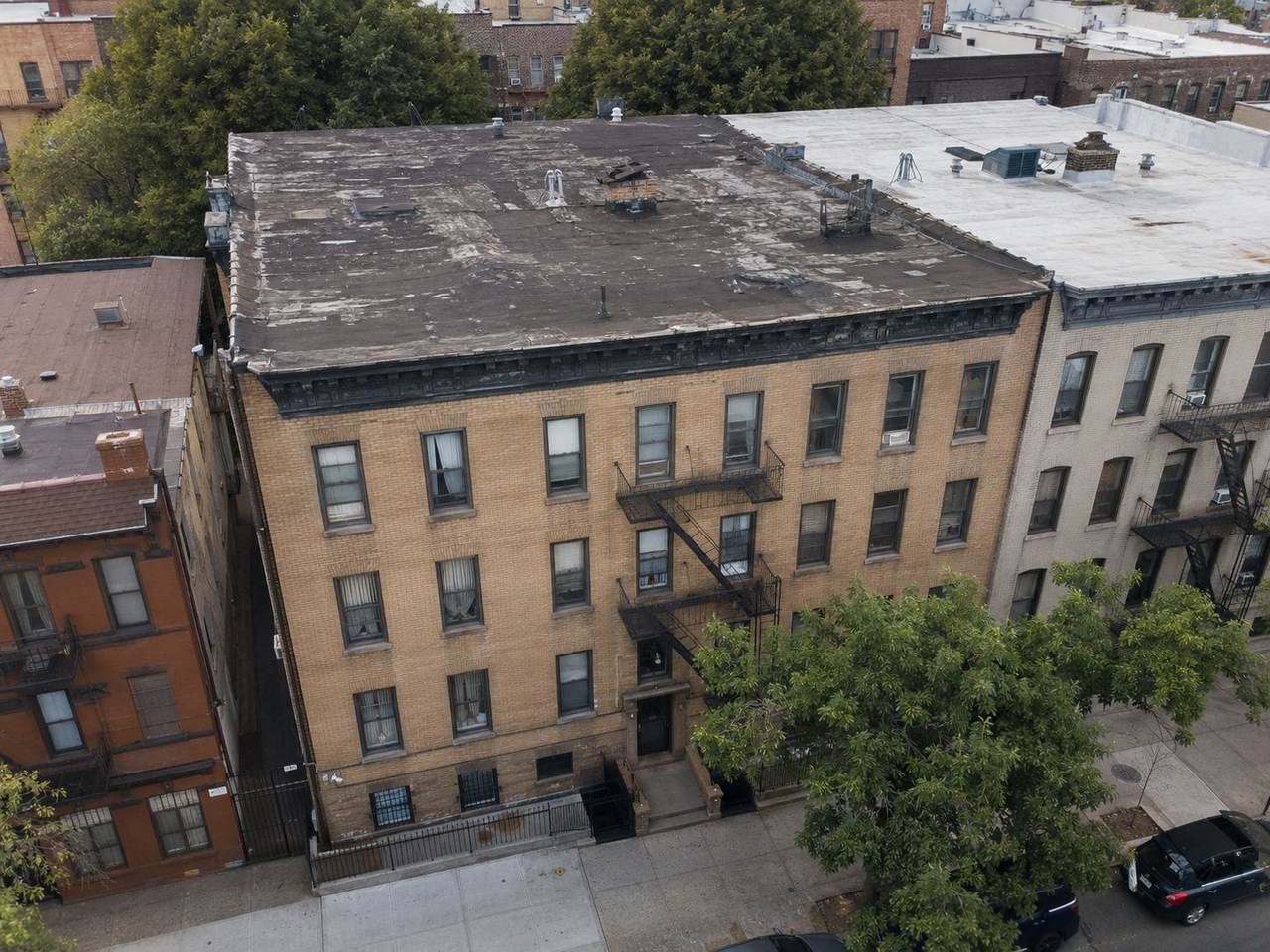
Pre-winter roof checklist to prevent ice dams, leaks and parapet failures.

How often NYC homeowners should clean gutters, what to watch for, and when to call a pro.

A room-by-room, roof-by-roof method for tracing a flat roof leak in a Brooklyn rowhouse — membrane seams, flashing, penetrations, drains, ponding and parapets — without setting foot on the roof.